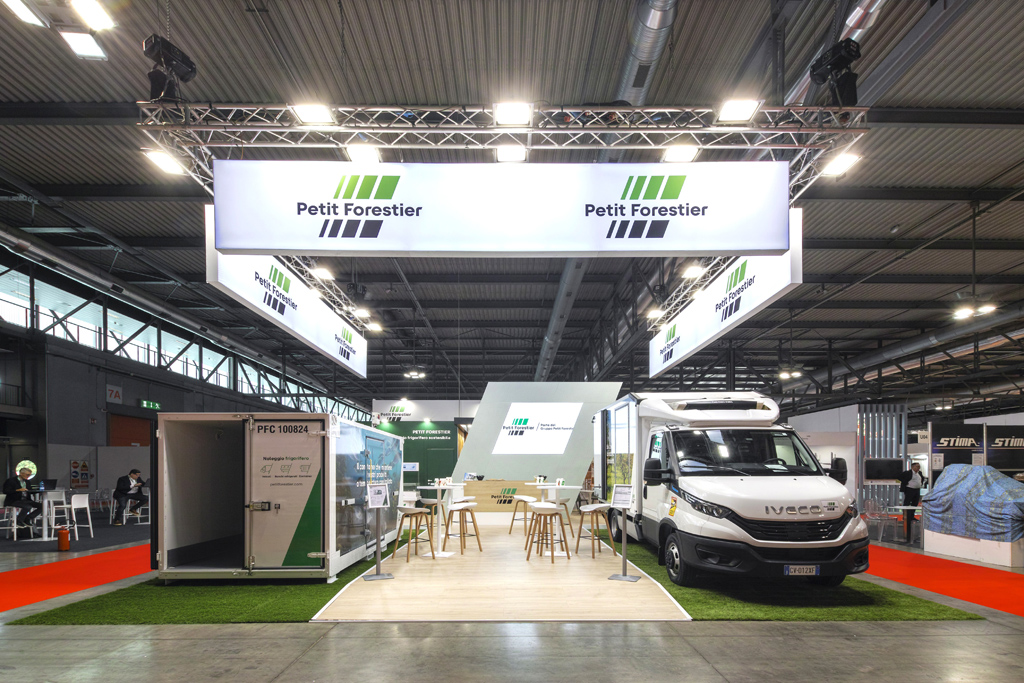
Participating in food fairs: how to set up your booth
At food fairs, taste and aroma speak louder than words. The scent of freshly baked bread or a steaming plate of pasta draws visitors in, creating experiences no slogan could match.


At food fairs, taste and aroma speak louder than words. The scent of freshly baked bread or a steaming plate of pasta draws visitors in, creating experiences no slogan could match.
In the food industry, a trade show booth becomes a stage for the senses, turning every product into a memorable experience. Architecture meets culinary science, and every inch tells a story of flavor.
Visitors crave authenticity: they want to see, touch, and taste. Their journey through the booth is carefully crafted, from first curiosity to final tasting, with each step designed for maximum impact.
Behind every perfect bite lies precise planning, certified materials, and a seamless, behind-the-scenes orchestration that makes it all possible.
Designing a food booth requires multidisciplinary expertise that goes far beyond traditional setups, as every food category has specific needs.
Fresh products demand uninterrupted cold chains, baked goods need to maintain their fragrance and crispness, and liquids require professional dispensing systems.
Materials certified for indirect food contact represent the first technical pillar.
AISI 316 stainless steel, high-density polyethylene, and tempered glass: all surfaces that come into contact with food must comply with strict regulations.
Hygienic surfaces require welded joints, rounded corners, and antimicrobial finishes.
The systems form the invisible heart of the stand.
Modular refrigeration systems maintain controlled temperatures even during peak hours.
Dedicated plumbing systems ensure potable water for food preparation and cleaning, while certified electrical circuits power professional equipment with uncompromised safety.
The internal layout turns the stand into a carefully designed journey: welcome area, product presentation, tasting zone, relaxation space, and guided exit.
In the world of food, sight comes before taste. Warm hues recall the comfort of baked goods, cool shades enhance the perception of freshness, and transparent surfaces celebrate the purity of liquids.
Every color choice is intentional: it awakens appetite, conveys quality, and evokes the land of origin, preparing the senses for what is about to be experienced.
Lighting becomes a powerful storytelling tool. High color-rendering LEDs reveal the true beauty of ingredients, enhancing their natural tones without alteration.
Dynamic color temperatures follow the rhythm of the day, while focused beams spotlight signature products, creating visual attractions. Soft, diffused light surrounds tasting areas, ensuring comfort and an atmosphere of refined hospitality.
Materials speak the language of the product. Natural woods express craftsmanship and authenticity, polished steel conveys precision and innovation, stone recalls tradition and heritage.
Textures and finishes work together to transmit values and positioning, guiding visitors on a subconscious journey that builds desire and expectation even before the first taste.
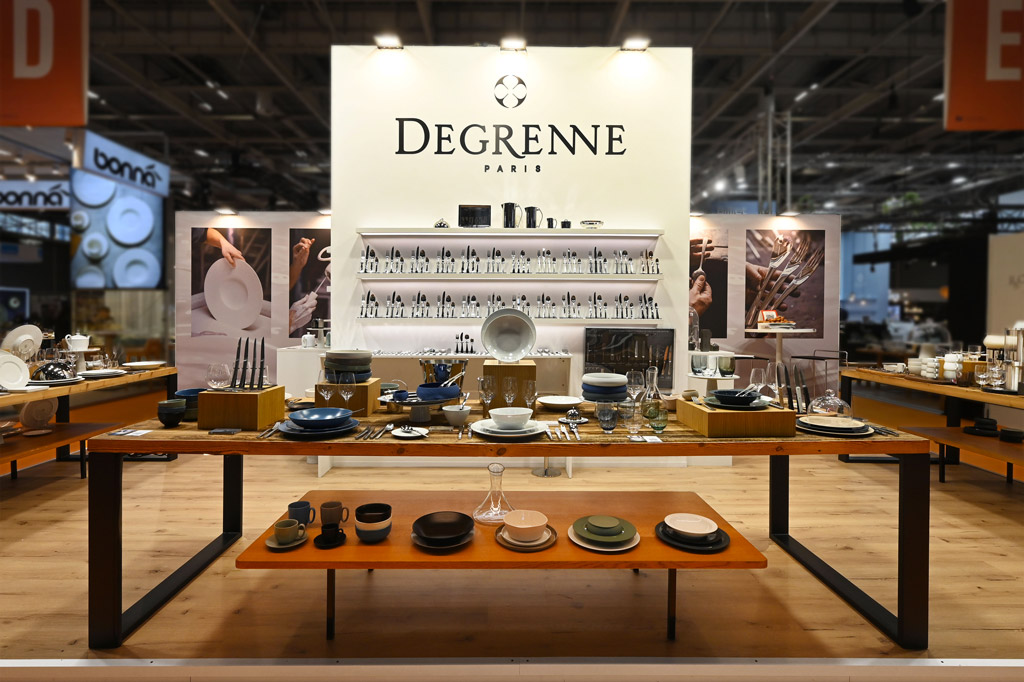
Food companies have distinct identities and operational requirements, which translate into precise design choices.
Here, professional intimacy takes center stage. Compact spaces where each product has its own dedicated niche, materials that echo the land of origin, and warm lighting that creates a welcoming, almost domestic atmosphere.
In this setting, the artisan often becomes a storyteller, and the visitor an engaged listener, drawn into the narrative behind each flavor.
Efficiency is the key concept. Clean lines, visible technologies, transparent processes. Industrial scale is humanized through tasting areas, where high volumes meet personal attention. Certifications and production workflows become part of the visual language and an integral element of the design.
Transparency and reflections dominate the scene. Vertical displays use height to create striking product walls, tasting zones host temporary cocktail bars, and professional dispensing systems turn sampling into a live performance. Bottles are showcased like precious jewels, illuminated to enhance their allure.
This is where the show happens. Layouts designed for 360-degree visibility, silent extraction hoods, non-slip flooring, and carefully dimensioned workspaces ensure flawless technical gestures while transforming cooking into a captivating experience for the audience.
“Do you really need all this paperwork just to exhibit Parmigiano?””
We hear this question often, and not only about cheese. The answer is yes. It’s no one’s fault, it’s simply the price of food safety in a national and international trade fair environment.
Behind every food-focused stand lies a complex world of permits and regulations that often surprises even the most experienced companies. A dairy showcasing aged cheeses has completely different requirements from a distillery presenting spirits, or a bakery operating a live oven.
CAMA52 knows these differences because we deal with them every day. We know that Cologne requires different certifications than Milan, that the local health authority in Rimini follows specific procedures for SIGEP, and that certain exhibition venues demand additional documentation for cooking installations.
The real issue is not the amount of documentation required, but coordinating everything within the right timeframes. When the marketing manager calls three weeks before the trade show for “a small layout change,” are they aware that this modification may require new permits? And when the sales team decides to add a tasting corner, have they accounted for the time needed for health and safety inspections?
We have. Because experience has taught us that in this industry, every unexpected change comes with an exponential cost. That is why we manage everything in-house. Our clients focus on their business. We make sure everything works.
Between the brilliant idea of a stand and its actual realization at a trade fair there is a crucial step that is often underestimated: the moment when the concept is translated into concrete technical specifications.
Imagining a tasting corner with an open kitchen is one thing. Calculating structural loads to support a professional oven, sizing extraction systems, and defining technical routes for water and gas is another.
This is where vision meets engineering.
In the food sector, this phase is even more critical. Every element carries specific technical implications: refrigerated counters require dedicated power supplies and condensate drainage, preparation areas must comply with precise hygienic distances, and food-contact surfaces must feature certified joints and finishes.
A mistake at this stage can jeopardize not only the schedule, but the entire operability of the stand.
CAMA52 manages this transformation entirely in-house, with a technical department working in direct dialogue with the carpentry workshop.
When a designer develops a refrigerated display unit, they know exactly how it will be built, with which materials, and within what timeframe.
There are no surprises, because those who design have a deep, first-hand knowledge of those who build.
Sometimes companies come to us with fully developed projects, often created by creative agencies.
Our role is to verify that everything is truly feasible: can that curved tasting counter be produced with certified food-contact materials? Does that spectacular lighting setup comply with fire safety regulations?
A technical adaptation phase is often required and, if not managed properly, it can extend timelines more than expected.
This is the ideal scenario, the one that allows us to fully express our expertise. Design, production, graphics, logistics: all under one single direction.
The benefit for the client is clear: one point of contact, controlled timelines, and clearly defined responsibilities.
The designer who plans the live cooking area knows exactly how our carpentry workshop operates, the graphic designer understands the surfaces on which they will print, and the logistics manager coordinates proven transport solutions.
Many food companies attend multiple events throughout the year: Cibus, Anuga, SIAL, regional exhibitions.
Here, complexity increases: different regulations for each fair, venues with specific technical constraints, and compliance requirements for international markets. Centralized management becomes essential to ensure consistency, regulatory compliance, and cost control across all events.
Why do we handle everything in-house? Because in the food industry, there are no second chances.
If the refrigeration system fails, if the preparation area does not meet regulations, if the materials are not certified, your stand becomes unusable.
Our strength lies in continuity: from the initial concept to final installation, every phase is managed by the same team.
This eliminates the typical risks of fragmented workflows—lost information, misinterpreted specifications, and blurred responsibilities between multiple suppliers.
The competitive edge? Less stress for you, greater control over timelines, and a more reliable final result. At the trade show, you can be confident that everything will perform exactly as planned, allowing you to focus all your energy on your commercial strategy.
“How long does it take to build our stand?” It’s the first question in every briefing. The honest answer is: it depends.
For a smooth, stress-free project.
Fast-track projects for last-minute opportunities.
In these cases, experience makes all the difference.
We activate proven protocols: priority access in our workshops, a network of already qualified specialist suppliers, and long-standing relationships with exhibition authorities.
The real secret lies in “invisible” preparation: our projects start from consolidated checklists, pre-qualified suppliers, and technical solutions already tested in similar scenarios. Because we know that behind every trade fair participation there are investments, expectations, and business opportunities that simply cannot wait.
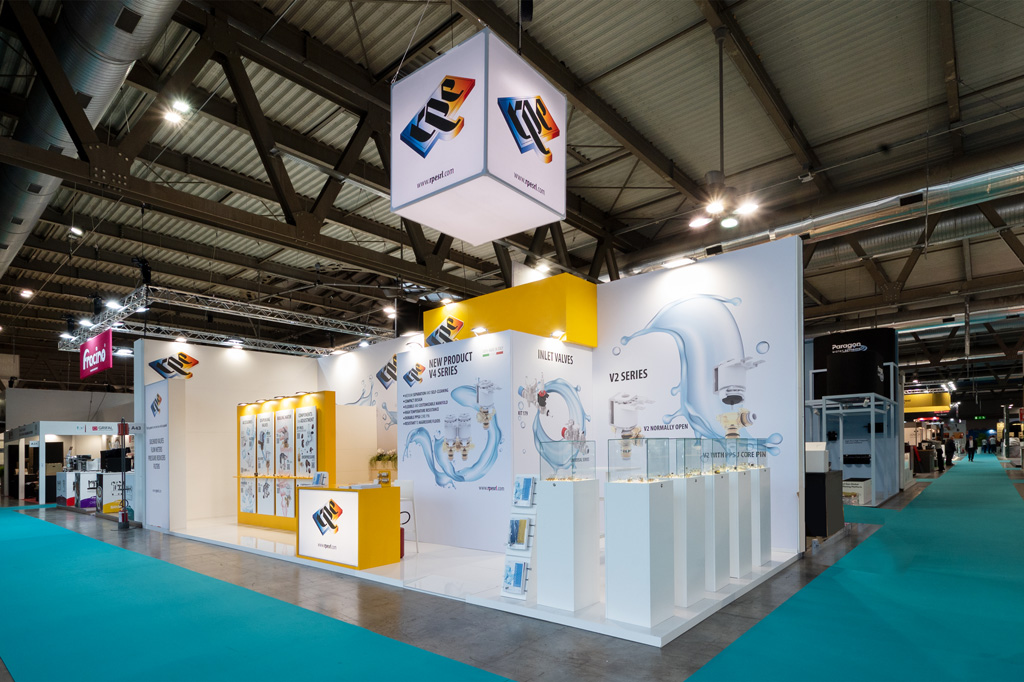
At trade fairs, schedules are rigid, access is strictly regulated, and installation windows are limited. A single day of delay can turn into a logistical issue—or worse, an irreparable blow to your brand image.
Many companies have to coordinate multiple parties: designers, builders, graphic teams, transporters, installers. This multiplies the risks. One overlooked detail, one piece of miscommunicated information, is enough to jeopardize the entire operation.
Our approach eliminates these risks at the root. Because an integrated process means fewer steps, fewer intermediaries, and greater direct control.
The result for the client is tangible.
When you arrive at the trade fair, you know that your stand will be ready exactly when needed, fully functional in every detail. And this allows you to focus all your energy on your commercial strategy.
Food is never just food. It is memory, territory, and tradition made present.
At a trade fair, this magic must happen within a few square meters, in just a few minutes of a visit, through an exhibition space capable of handling both your company’s story and the essence of your products.
Brand: identity, values, history, and positioning.
Product: what is seen, touched, smelled, and tasted. Two different but complementary dimensions that must be orchestrated together.
An artisanal cured meat tells the story of the family tradition behind it, as well as its texture, its aroma, its unmistakable flavor. An aged cheese carries with it the history of the dairy and, at the same time, the roughness of its rind, the creaminess of its paste, the intensity of its aroma.
Our role is to orchestrate both narratives. To create spaces where your corporate identity stands out clearly, where visitors immediately understand who you are, what you stand for, and why they should choose you. At the same time, we design environments that enhance the sensory dimension of your products—through lighting that brings out their natural colors, surfaces that respect their character, and temperatures that preserve their integrity.
Even when your world is made of stainless steel and industrial processes, when the dominant colors are aluminum and the aseptic white of production lines, it is still pure experience. It is the experience of precision, innovation, and food safety taken to the highest level. It is a different kind of theatricality—but theatricality nonetheless.
We know that behind every product there is a universe of choices: raw materials, processes refined over time, quality controls, passions that become a profession. Our exhibition design must make all of this perceptible, must make the intangible tangible.
Exhibiting at a Trade Fair Means More Than Just Being There A stand helps you to:
Because at a trade fair, a very special game is played: you have very little time to tell a great deal.
We understand the impact of a well-presented tasting, the value of a surface that respects the product, the importance of lighting that does not distort its true colors.
Because we know how to handle food as a vehicle for stories, identity, and territory. And we know how to translate all of this into spaces that work—spaces that allow you to operate smoothly and confidently during the days of the exhibition.
Your next trade fair can become the opportunity to truly tell who you are.
Tell us about your project. Let’s talk about your company, your products, your ambitions for the fair. Together, we will transform your vision into a space that speaks both to the mind and to the senses.
If you have an upcoming trade fair, contact us.